
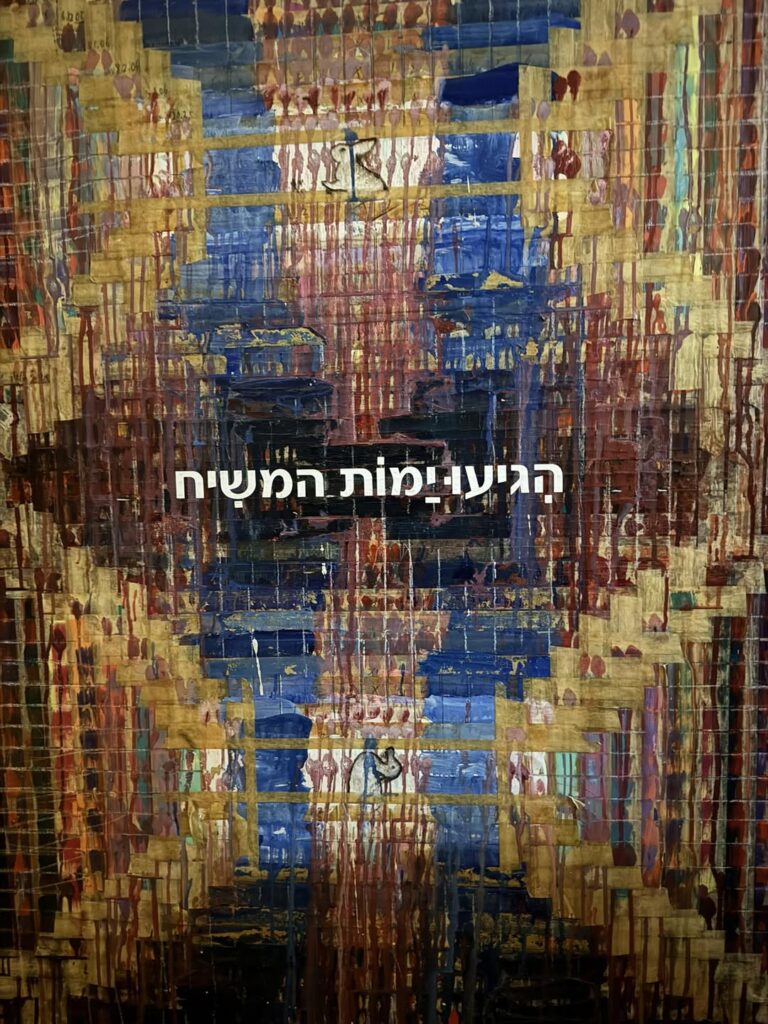
אין ייאוש בעולם כלל
“There is no despair in the world at all.”
This well-known phrase comes from Rabbi Nachman of Breslov, and it is often misunderstood. Many hear it as emotional denial, as if faith means pretending pain does not exist. But Rabbi Nachman never meant that despair is not felt. He meant something far stronger and far more demanding:
Despair is never the truth, even when it feels overwhelming.
Rabbi Nachman himself lived with deep suffering—physical illness, depression, loneliness, and opposition. His declaration was not naïve optimism. It was defiance rooted in faith. He was saying that no matter how dark the moment becomes, the story is not finished.
What “Despair” (יֵאוּשׁ) Really Means
In Jewish thought, יֵאוּשׁ (ye’ush) is not sadness. It is not grief. It is not even depression.
Ye’ush means giving up the belief that change is possible.
To feel pain is human.
To conclude that nothing can ever change is spiritual danger.
That is what Rabbi Nachman confronts when he says:
אין ייאוש בעולם כלל — there is no despair in the world at all.
Not because the world is easy, but because Elohim is not finished acting within it.
You Can Be a Tree of Life
Scripture offers a parallel image to Rabbi Nachman’s teaching: the Tree of Life. This image runs from Genesis to Revelation and speaks directly to endurance, healing, and hope deferred.
What “Tree of Life” Means
A Tree of Life is not flashy or loud. In Scripture, it is:
Rooted — enduring through seasons
Life-giving — sustaining others
Consistent — bearing fruit in its time
Healing — offering restoration
“The fruit of the righteous is a tree of life.”
Proverbs 11:30 (NKJV)
פְּרִי־צַדִּיק עֵץ חַיִּים
“A gentle tongue is a tree of life.”
Proverbs 15:4 (NKJV)
מַרְפֵּא לָשׁוֹן עֵץ חַיִּים
A Tree of Life does not dominate its environment.
It creates shade, nourishment, and refuge.
Notice This: The Tree Lives Before It Gives
A tree does not strive to produce fruit.
It produces fruit because it is alive and rooted.
Being a Tree of Life is not about:
Fixing everyone
Carrying the whole world
Never feeling weak
It is about remaining connected to truth, even when pressed.
The Tree of Life in Eden (Genesis 2–3)
“The LORD Elohim made all kinds of trees grow out of the ground—trees that were pleasing to the eye and good for food. In the middle of the garden were the tree of life and the tree of the knowledge of good and evil.”
Genesis 2:9 (NKJV)
וְעֵץ הַחַיִּים בְּתוֹךְ הַגָּן
The Tree of Life represents:
Unbroken life with Elohim
Sustained existence, not earned immortality
Life received, not controlled
After the fall, humanity is barred from the Tree of Life:
“…lest he reach out his hand and take also from the tree of life, and eat, and live forever—”
Genesis 3:22 (NKJV)
This is not cruelty—it is mercy.
Living forever in a broken state would be eternal exile.
The Tree of Life is not destroyed.
It is guarded.
Exile, Wisdom, and Longing
From Genesis onward, the Tree of Life disappears from the narrative, but not from memory. It reappears symbolically:
In wisdom — “She is a tree of life” (Proverbs 3:18)
In righteous speech
In faithful endurance
Humanity lives in exile, longing for what was lost.
The Tree of Life Restored (Revelation)
“To the one who overcomes, I will grant to eat of the tree of life, which is in the paradise of Elohim.”
Revelation 2:7 (NKJV)
And finally:
“On either side of the river was the tree of life, bearing twelve kinds of fruit… and the leaves of the tree were for the healing of the nations.”
Revelation 22:2 (NKJV)
What has changed?
In Eden: one couple
In Revelation: the nations
In Eden: guarded
In Revelation: freely given
In Eden: life lost
In Revelation: life restored and expanded
Redemption does not merely return what was lost.
It fulfills it.
Hope Deferred and the Marathon of Life
“Hope deferred makes the heart sick, but when the desire comes, it is a tree of life.”
Proverbs 13:12 (NKJV)
תּוֹחֶלֶת מְמֻשָּׁכָה מַחֲלָה־לֵב וְעֵץ חַיִּים תַּאֲוָה בָאָה
I have run many 10-km races across Israel—Jerusalem, Tel Aviv, Haifa, Be’er Sheva. There is music, water stations, cheering crowds. Your heart is pumping. Blood is flowing.
But there is a moment near the end when your strength is gone. Your legs hurt. Your breath is shallow. You want to stop.
Then you turn a corner—and suddenly you hear voices. Friends. Family. Strangers cheering.
It does not give your muscles strength.
It gives your heart permission to continue.
Encouragement does not remove pain.
It reminds you why you are still running.
The Rat Race Under the Sun
Where is everyone running?
More money before death.
More power.
More recognition.
“That which has been is what will be… and there is nothing new under the sun.”
Ecclesiastes 1:9–10 (NKJV)
אֵין כָּל־חָדָשׁ תַּחַת הַשָּׁמֶשׁ
Solomon (Kohelet) searched wisdom, pleasure, achievement, wealth, and legacy.
“All is vanity and grasping for the wind.”
Ecclesiastes 1:14 (NKJV)
הֶבֶל וּרְעוּת רוּחַ
He was not saying life has no meaning.
He was saying meaning cannot be found “under the sun.”
The Purpose of Man
Solomon ends with clarity:
“Fear Elohim and keep His commandments, for this is the whole of man.”
Ecclesiastes 12:13 (NKJV)
כִּי־זֶה כָּל־הָאָדָם
Purpose is not self-expression.
Purpose is faithful obedience.
Three Levels of Descent
 Disappointment — unmet expectation
 יֵאוּשׁ (Ye’ush) — loss of hope
 וִיתּוּר (Vitur) — quiet resignation
Disappointment hurts.
Despair darkens.
Resignation kills calling.
Scripture interrupts this descent:
Disappointment → Prayer (Psalm 62:8)
Despair → Remembrance (Psalm 77:11)
Resignation → Fear of Elohim (Ecclesiastes 12:13)
Joseph and David: Hope Deferred, Not Destroyed
Joseph dreamed of leadership—but found chains, slavery, and prison.
“Until the time that his word came to pass…”
Psalm 105:19
David was anointed king—but lived in caves.
“How long, O LORD?”
Psalm 13:1
Neither surrendered to ye’ush or vitur.
Both became trees of life for nations.
Encouragement as a Lifeline
“Joses, who was also named Barnabas… Son of Encouragement.”
Acts 4:36 (NKJV)
Barnabas stood with Paul.
Restored John Mark.
Pulled people back from the edge.
To exhort (παρακαλέω — parakaleō) is to come alongside and help someone keep going.
Yeshua promised:
“I will give you another Helper…”
John 14:16 (NKJV)
The Paraklētos — Helper, Comforter, Advocate — does not remove pain.
He walks with us through it.
New Creation, Not Emotional Denial
“If anyone is in Messiah, he is a new creation.”
2 Corinthians 5:17
This does not mean you will never feel despair.
Paul himself wrote:
“We despaired even of life.”
2 Corinthians 1:8
New creation means pain no longer rules.
It speaks—but it does not reign.
Perplexed, Not in Despair
“Perplexed, but not in despair.”
2 Corinthians 4:8
This is אין ייאוש בעולם כלל in New Covenant language.
You may be pressed.
You may be exhausted.
You may be wounded.
But despair is never the final truth.
Run the Race Set Before You
“Let us run with endurance the race set before us.”
Hebrews 12:1
It is your race.
Your terrain.
Your pace.
And sometimes, endurance looks like this:
Standing up again while still wounded.
Praying without feeling.
Holding hope for someone else.
There is no despair in the world at all —
because Elohim is still writing the story.
And sometimes, simply staying rooted
is how you become a Tree of Life.
