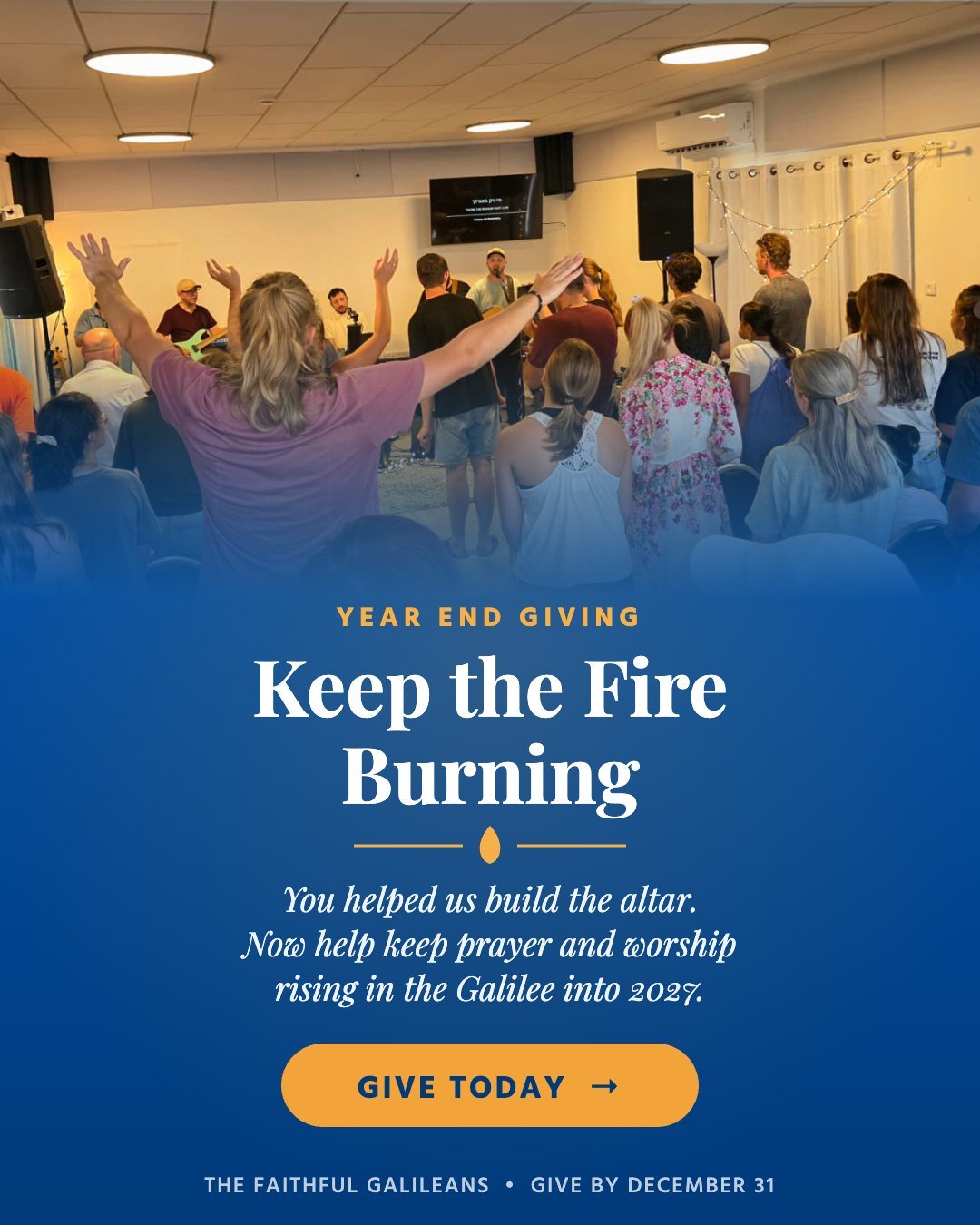
Hineini: here am I, send me. A message of hope, purpose, thanksgiving and faithfulness through trials, from Israel to the nations, living under the lordship of Yeshua the Messiah.
By Chaim Malespin | Galilee, Israel
There are moments in life when our plans change completely.
We may have dreams, ambitions, and expectations about the future. We may believe we know where we are going, only to discover that Elohim is leading us somewhere entirely different.
After years of war in Israel, prolonged military service, separation from family, and the challenges of building communities and helping people, I have learned that our greatest calling is not simply to understand every circumstance.
It is to respond faithfully when Elohim calls.
הִנְנִי: Hineini, Here am I.
The words here am I, send me represent availability, surrender, and obedience.
In Isaiah 6:8 | ישעיהו ו׳:ח׳, the prophet hears the voice of Adonai asking who will go.
Isaiah responds:
הִנְנִי שְׁלָחֵנִי
Hineini, shelacheni.
“Here am I; send me.”
Isaiah did not receive a promise that his assignment would be easy. In fact, the following verses describe a difficult prophetic mission.
Yet he responded willingly.
The greatest question is not whether the road ahead will be comfortable, but whether we are willing to walk where Elohim calls us.
1. Hope and Purpose: When Our Plans Change
Jeremiah 29:11 | ירמיהו כ״ט:י״א
כִּי אָנֹכִי יָדַעְתִּי אֶת־הַמַּחֲשָׁבֹת אֲשֶׁר אָנֹכִי חֹשֵׁב עֲלֵיכֶם נְאֻם־יְהוָה מַחְשְׁבוֹת שָׁלוֹם וְלֹא לְרָעָה לָתֵת לָכֶם אַחֲרִית וְתִקְוָה
“For I know the plans I have for you,” declares Adonai, “plans for peace and not for harm, to give you a future and a hope.”
These words were originally spoken to the Jewish exiles in Babylon.
They were not living in comfort. They had experienced displacement, loss, and uncertainty.
Yet Elohim reminded them that exile was not the end of their story.
The Hebrew word תִּקְוָה (Tikvah) means hope, expectation, and confidence concerning the future.
Hope is not pretending everything is going well.
Hope is believing that Elohim remains faithful even when circumstances are difficult.
Proverbs 19:21 | משלי י״ט:כ״א
רַבּוֹת מַחֲשָׁבוֹת בְּלֶב־אִישׁ וַעֲצַת יְהוָה הִיא תָקוּם
“There are many plans in a man’s heart; nevertheless the counsel of Adonai shall stand.”
We may have many plans, but His purpose will prevail.
The Hebrew עֵצָה (Etzah) means counsel, intention, or purpose.
Romans 8:28 | רומים ח׳:כ״ח teaches that Elohim works in all things for the good of those who love Him and are called according to His purpose.
This does not mean everything that happens is good.
War is not good. Suffering is not good. Losing loved ones is not good.
But Elohim can bring purpose, perseverance, and restoration even through painful circumstances.
And Romans 15:13 | רומים ט״ו:י״ג calls Him the Elohim of hope, who fills believers with joy and peace so that they may abound in hope.
Hope is trusting Elohim with tomorrow. Purpose is walking faithfully in His calling today.
2. It Is Good to Give Thanks
Psalm 92:1–2 | תהילים צ״ב:ב׳–ג׳
טוֹב לְהֹדוֹת לַיהוָה וּלְזַמֵּר לְשִׁמְךָ עֶלְיוֹן
Tov le’hodot l’Adonai, ulezamer leshimcha Elyon.
“It is good to give thanks to Adonai, and to sing praises to Your name, O Most High.”
לְהַגִּיד בַּבֹּקֶר חַסְדֶּךָ וֶאֱמוּנָתְךָ בַּלֵּילוֹת
Lehagid baboker chasdecha, ve’emunatcha baleilot.
“To declare Your lovingkindness in the morning, and Your faithfulness every night.”
Psalm 92 is introduced as:
מִזְמוֹר שִׁיר לְיוֹם הַשַּׁבָּת
Mizmor shir leyom haShabbat.
“A Psalm, a song for the Sabbath day.”
Three Hebrew words reveal its meaning:
טוֹב (Tov): Good, right, beneficial.
לְהֹדוֹת (Lehodot): To give thanks, acknowledge, and praise.
אֱמוּנָה (Emunah): Faithfulness, steadfastness, reliability.
The Hebrew Lehodot comes from the same root as Hodu, meaning “Give thanks!”
Thanksgiving is not merely a response to favorable circumstances.
It is good to give thanks because Elohim remains good, even when life is difficult.
During these years of war, I have experienced moments of exhaustion, danger, and separation from my family.
Yet I have also witnessed extraordinary courage, generosity, friendship, and perseverance.
We can declare His lovingkindness in the morning and remember His faithfulness during the darkest nights.
3. Water in the Desert: Hope Where Nothing Seems Possible
One of the most beautiful promises in Scripture concerns water appearing in the wilderness.
Isaiah 43:19 | ישעיהו מ״ג:י״ט
הִנְנִי עֹשֶׂה חֲדָשָׁה עַתָּה תִצְמָח הֲלוֹא תֵדָעוּהָ אַף אָשִׂים בַּמִּדְבָּר דֶּרֶךְ בִּישִׁמוֹן נְהָרוֹת
“Behold, I will do a new thing; now it shall spring forth … I will even make a way in the wilderness, and rivers in the desert.”
The wilderness represents uncertainty, vulnerability, and dependence.
Yet Elohim promises a way where no obvious road exists.
Isaiah 35:6 | ישעיהו ל״ה:ו׳ describes waters breaking forth in the wilderness and streams in the desert.
Isaiah 41:17–18 | ישעיהו מ״א:י״ז–י״ח speaks of providing water for the poor and needy when their tongues fail from thirst.
These promises originally belong to Isaiah’s prophetic vision of Israel’s restoration.
They also provide powerful images of hope.
There are seasons when our hearts feel like dry ground.
We have prayed, worked, sacrificed, and waited.
Yet nothing seems to change.
But the wilderness is not beyond the reach of Elohim.
Sometimes the place where we feel most empty becomes the place where we learn most deeply to depend upon Him.
4. Psalm 34: Protection, Trust, and Provision
David understood what it meant to live under threat.
Psalm 34 is traditionally connected to his escape from a Philistine ruler, described in 1 Samuel 21:10–15 | שמואל א׳ כ״א:י״א–ט״ז.
David had experienced fear, humiliation, and danger.
Yet he testified concerning the goodness of Adonai.
Psalm 34:7 | תהילים ל״ד:ח׳
חֹנֶה מַלְאַךְ־יְהוָה סָבִיב לִירֵאָיו וַיְחַלְּצֵם
“The angel of Adonai encamps around those who fear Him and delivers them.”
The word חֹנֶה (Choneh) means encamping.
It is a powerful military image.
As someone who has served in Israel’s military, I understand the significance of an encampment, protection, and standing guard.
But this passage is not a guarantee that faithful people will never experience injury or loss.
Rather, it calls us to place our confidence in Elohim amid uncertainty.
Psalm 34:8 | תהילים ל״ד:ט׳
טַעֲמוּ וּרְאוּ כִּי־טוֹב יְהוָה אַשְׁרֵי הַגֶּבֶר יֶחֱסֶה־בּוֹ
“O taste and see that Adonai is good: blessed is the man that trusts in Him.”
טַעֲמוּ וּרְאוּ: Ta’amu u’re’u.
Taste and see.
David invites us to experience the goodness of Elohim, not merely discuss it.
Psalm 34:9 | תהילים ל״ד:י׳
יְראוּ אֶת־יְהוָה קְדֹשָׁיו כִּי־אֵין מַחְסוֹר לִירֵאָיו
“Fear Adonai, you His holy ones, for those who fear Him lack nothing.”
The Hebrew יִרְאָה (Yirah) describes reverence, awe, and recognition of divine authority.
Psalm 34:10 | תהילים ל״ד:י״א
כְּפִירִים רָשׁוּ וְרָעֵבוּ וְדֹרְשֵׁי יְהוָה לֹא־יַחְסְרוּ כָל־טוֹב
“The young lions do lack, and suffer hunger: but they that seek Adonai shall not lack any good thing.”
The expression לֹא יַחְסְרוּ (Lo yachs’ru) means they shall not lack.
David teaches us to trust Elohim’s care.
Yet even faithful believers may experience hardship, hunger, or deprivation.
Our confidence is not that we will never face danger.
Our confidence is that Elohim remains our refuge in the midst of danger.
5. Prayer for the Sick and Healing in the Camp
When we speak about divine protection, we must remember those who are suffering physically and emotionally.
We pray for soldiers recovering from injury, families experiencing illness, and people carrying the invisible wounds of war.
James 5:14–16 | יעקב ה׳:י״ד–ט״ז instructs the elders of the Kehilah to pray over the sick.
Psalm 147:3 | תהילים קמ״ז:ג׳
הָרֹפֵא לִשְׁבוּרֵי לֵב וּמְחַבֵּשׁ לְעַצְּבוֹתָם
“He heals the brokenhearted and binds up their wounds.”
We pray for healing throughout our camp, our families, our Kehilah, and our communities.
Together, we ask for restoration of body, mind, and spirit.
We also recognize the importance of medical care, counseling, practical assistance, and standing beside those who suffer.
Prayer and compassionate action belong together.
Healing is not merely something we request. Caring for the wounded is also something we are called to do.
6. Elohim Has Given Us What We Need for Life and Godliness
2 Peter 1:3 | פטרוס ב׳ א׳:ג׳
“His divine power has given us all things that pertain to life and godliness, through the knowledge of Him who called us.”
This verse reveals three important principles.
First, divine provision: Elohim has provided what is necessary for a life of faithful devotion.
Second, relationship: these gifts come through knowing Him, not merely knowing about Him.
Third, purpose: we are called to live with virtue, faithfulness, and character reflecting His goodness.
Peter continues in 2 Peter 1:4–8 | פטרוס ב׳ א׳:ד׳–ח׳, describing a progression of spiritual growth:
Faith → Virtue → Knowledge → Self-control → Perseverance → Godliness → Brotherly kindness → Love.
The Greek word for perseverance is ὑπομονή (Hypomonē).
It describes steadfast endurance under pressure.
What an important word for our generation!
Perseverance is not passive waiting.
It is continuing faithfully when the road becomes difficult.
It means refusing to abandon love, integrity, service, and obedience because circumstances have become challenging.
We are called not merely to survive our trials, but to grow through them.
7. Elohim Remembers Every Moment
Sometimes we wonder whether our sacrifices have been noticed.
Does Elohim remember the prayers nobody heard?
The tears shed in private?
What about the years spent serving others?
The opportunities surrendered because of obedience?
Isaiah 56:5 | ישעיהו נ״ו:ה׳ contains an extraordinary promise:
וְנָתַתִּי לָהֶם בְּבֵיתִי וּבְחוֹמֹתַי יָד וָשֵׁם טוֹב מִבָּנִים וּמִבָּנוֹת שֵׁם עוֹלָם אֶתֶּן־לוֹ אֲשֶׁר לֹא יִכָּרֵת
“I will give them, in My house and within My walls, a memorial and a name better than sons and daughters; I will give them an everlasting name that shall not be cut off.”
The Hebrew expression is:
יָד וָשֵׁם: Yad VaShem.
Literally, a memorial and a name.
This is the biblical expression from which Israel’s Holocaust remembrance institution, Yad Vashem, takes its name.
The original promise in Isaiah concerns faithful eunuchs who keep the covenant, and the surrounding passage also welcomes foreigners who join themselves to Adonai.
It speaks of dignity, belonging, and remembrance.
What a profound truth.
People may forget our sacrifices.
History may overlook countless acts of faithfulness.
But Elohim remembers.
Hebrews 6:10 | אל העברים ו׳:י׳ likewise teaches that Elohim is not unjust to forget the work and love shown in serving His people.
Our service is not meaningless.
Neither are our prayers insignificant.
Our faithfulness is not forgotten.
8. Israel and Korea: A Connection Through Prayer and Purpose
One of the remarkable privileges of my work has been meeting people from nations around the world who care deeply about Israel.
Korea has a particularly meaningful place in these relationships.
Israel and Korea are different nations with distinct histories, cultures, and experiences.
Both have experienced war, national hardship, and the tremendous effort required to rebuild communities.
During my travels to Korea, I have been encouraged by opportunities to connect with people who pray for Israel, seek understanding, and desire meaningful relationships.
These friendships should not be built merely upon political agreement or emotional enthusiasm.
They should be strengthened through understanding, mutual respect, education, and practical cooperation.
Isaiah 56:7 | ישעיהו נ״ו:ז׳ declares:
כִּי בֵיתִי בֵּית־תְּפִלָּה יִקָּרֵא לְכָל־הָעַמִּים
“For My house shall be called a house of prayer for all peoples.”
The nations are invited to seek Adonai.
Our prayer is that meaningful friendships between Israel and Korea will continue to grow, and that people will be inspired to pursue peace, serve those in need, and stand against antisemitism.
We pray for healing in both nations, for families affected by conflict, and for opportunities to strengthen understanding.
Our calling is not merely to build audiences across borders. It is to build relationships that produce lasting fruit.
9. More Than Savior: Yeshua Must Be Lord
Now we come to a question that challenges every believer.
Luke 6:46 | לוקס ו׳:מ״ו
“And why call ye me, Lord, Lord, and do not the things which I say?”
In Greek:
Κύριε κύριε, καὶ οὐ ποιεῖτε ἃ λέγω;
Kyrie, Kyrie, kai ou poieite ha legō?
The word Κύριος (Kyrios) means Lord, Master, or one possessing authority.
Yeshua was not asking whether people knew the correct religious title.
He was challenging whether they were living under His authority.
It is possible to speak about Yeshua, sing about Him, and acknowledge Him publicly while resisting His instructions.
But genuine discipleship requires more than verbal agreement.
Matthew 7:21–23 | מתי ז׳:כ״א–כ״ג warns that not everyone who says “Lord, Lord” will enter the Kingdom, but those who do the Father’s will.
Matthew 7:24–27 | מתי ז׳:כ״ד–כ״ז compares those who hear and obey Yeshua’s words to a wise builder whose house stands upon rock.
John 14:15 | יוחנן י״ד:ט״ו declares:
“If ye love me, keep my commandments.”
And John 14:23–24 | יוחנן י״ד:כ״ג–כ״ד connects loving Yeshua with keeping His words.
John 13:13–17 | יוחנן י״ג:י״ג–י״ז records Yeshua acknowledging that His disciples rightly call Him Master and Lord, then demonstrating humble service.
Lordship is not merely a doctrine.
It transforms how we live.
10. The Cost of Following Messiah
Luke 9:23 | לוקס ט׳:כ״ג calls disciples to deny themselves, take up their cross daily, and follow Yeshua.
Luke 14:33 | לוקס י״ד:ל״ג emphasizes the cost of discipleship and wholehearted allegiance.
Matthew 28:18–20 | מתי כ״ח:י״ח–כ׳ declares that Yeshua possesses all authority and commands His disciples to teach others to observe His instructions.
The Great Commission was spoken in the setting of the Galilee.
This is particularly meaningful to me because the Galilee remains central to my life and calling.
From this land, Yeshua sent His disciples to the nations.
And today, we continue encouraging people to understand Israel, learn its history, and pursue lives of faithful service.
Romans 10:9 | רומים י׳:ט׳ connects confessing Yeshua as Lord with faith in His resurrection.
Philippians 2:9–11 | פיליפים ב׳:ט׳–י״א declares that every knee will bow and every tongue confess Yeshua the Messiah as Lord.
Romans 14:7–9 | רומים י״ד:ז׳–ט׳ teaches that Messiah is Lord of both the living and the dead.
These passages describe authority that reaches beyond religious gatherings.
His lordship concerns our decisions, relationships, priorities, possessions, and conduct.
11. Living Under His Lordship Every Day
1 Corinthians 6:19–20 | קורינתים א׳ ו׳:י״ט–כ׳ reminds believers that they are not their own, having been bought with a price.
2 Corinthians 5:14–15 | קורינתים ב׳ ה׳:י״ד–ט״ו teaches that those for whom Messiah died should no longer live for themselves.
Galatians 2:20 | גלטים ב׳:כ׳ describes a life transformed through union with Messiah.
1 John 2:3–6 | יוחנן א׳ ב׳:ג׳–ו׳ connects knowing Him with keeping His commandments.
James 1:22 | יעקב א׳:כ״ב calls us to be doers of the word, not hearers only.
James 2:17–26 | יעקב ב׳:י״ז–כ״ו teaches that faith without works is dead.
Romans 6:16–18 | רומים ו׳:ט״ז–י״ח connects obedience with the one whom we serve.
And Acts 10:36 | מעשי השליחים י׳:ל״ו proclaims Yeshua the Messiah as Lord of all.
These passages reveal a consistent principle:
We cannot separate genuine faith from the transformation of our lives.
12. Lord and Savior Belong Together
Yeshua is both Savior and Lord.
2 Peter 1:11 | פטרוס ב׳ א׳:י״א uses both titles.
As Savior, He brings redemption, forgiveness, and reconciliation.
As Lord, He calls us into obedience, faithfulness, and a transformed life.
Colossians 2:6 | קולוסים ב׳:ו׳ teaches believers to walk in Yeshua the Messiah as they received Him.
1 Peter 3:15 | פטרוס א׳ ג׳:ט״ו calls believers to honor Messiah as Lord in their hearts, according to the reading found in many modern translations.
Ephesians 5:17 | אפסים ה׳:י״ז instructs believers to understand the will of the Lord.
Titus 2:11–14 | טיטוס ב׳:י״א–י״ד teaches that grace trains believers to reject ungodliness and live upright lives.
And Revelation 19:16 | התגלות י״ט:ט״ז identifies Messiah as:
KING OF KINGS AND LORD OF LORDS.
Yet we must preserve an essential truth.
We do not purchase redemption through obedience.
Ephesians 2:8–10 | אפסים ב׳:ח׳–י׳ teaches that salvation is by grace through faith, and that we are created for good works.
Obedience is the fruit of genuine faith, not the price of redemption.
Conclusion: Hineini, Here Am I, Send Me
When we bring these Scriptures together, we discover a powerful message.
Jeremiah teaches us hope.
Proverbs reminds us that Elohim’s purpose will stand.
Psalm 92 teaches us thanksgiving.
Psalm 34 teaches us trust and refuge.
Isaiah promises water in the wilderness and remembrance for those who remain faithful.
Peter teaches perseverance and spiritual growth.
And Yeshua calls us beyond religious profession into a life of genuine obedience.
There will be seasons when our plans fail.
Times will come when we experience suffering, uncertainty, sickness, and loss.
There will be moments when the wilderness seems endless.
But we are not called merely to understand every circumstance.
We are called to remain faithful: to pray for those who are sick, to serve the vulnerable, to encourage the discouraged, to stand with Israel and strengthen meaningful friendships among the nations, to give thanks in every season, and to live under the authority of Yeshua the Messiah.
Our hope is not that every road will be easy. Our hope is that Elohim remains faithful wherever He leads us.
So may our response be the same as Isaiah’s:
הִנְנִי שְׁלָחֵנִי
Hineini, shelacheni.
Here am I, send me.
Not merely when the assignment is convenient.
Not merely when the future is clear.
But wherever He calls, whatever the cost, and however long the journey.
Hope for tomorrow. Purpose for today. Thanksgiving through every trial. Obedience through it all.
חֲזַק וֶאֱמָץ: Chazak Ve’ematz!
Be strong and courageous.
עַם יִשְׂרָאֵל חַי: Am Yisrael Chai!
Chaim Malespin
From the Galilee, Israel